
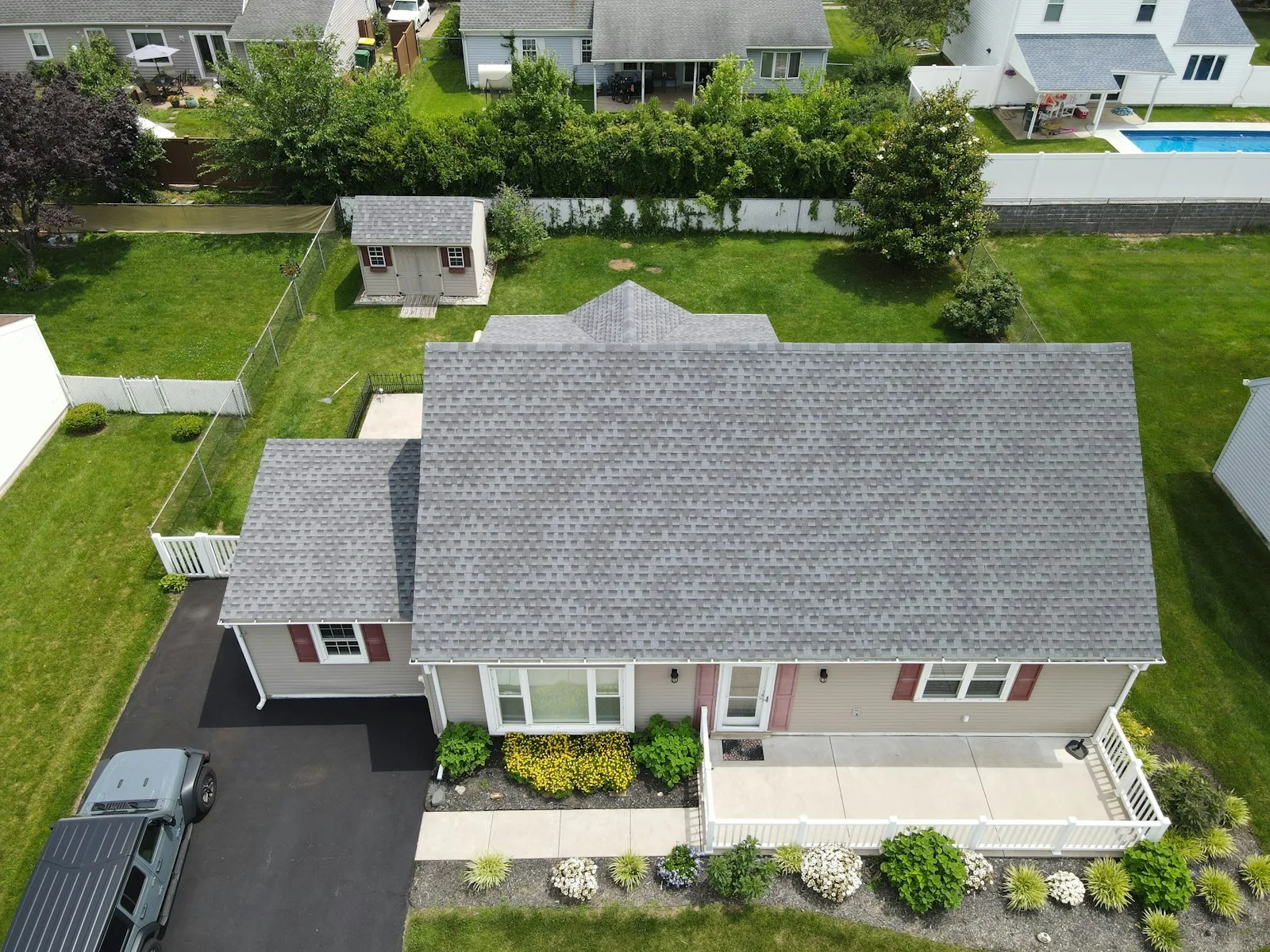
Start with safety
Do not climb onto a damaged roof. Keep away from fallen lines, unstable materials, and areas with active electrical or structural hazards. Photograph only what you can safely see from the ground.
Make a useful record
Write down when you first noticed the issue, where water appeared, and what changed after the weather. Keep photos and any records of temporary protection together.
Separate the decisions
A roofing assessment helps define condition and repair options. Your insurer determines coverage under your policy; neither a website nor an inspection alone can guarantee payment.
Ask about the next step
Confirm current response availability and what the assessment includes. If there is immediate danger, contact the appropriate emergency services.
Make it specific to your home.
This is general planning information, not a diagnosis, quotation, insurance determination, or promise of product performance. A property-specific assessment and written scope are the next steps.